 United States
Frequency of Therapy Alerts During the First 30 Days of Automated Peritoneal Dialysis and Its Relationship to Time on Treatment
Automated PD
Written by Richard Booth, Lead for Chronic Therapies, Medical Affairs A/NZ
In a recently published article from ANZDATA, authored by Annie Conway, (link to abstract) the number of alerts in the first 30 days of automated peritoneal dialysis (APD) was a risk factor for discontinuation, and also provided an opportunity for interventions to improve PD continuation rates. The lead author also delivered a webinar on the results as part of the Vantive virtual education series, and the recording of that webinar is available on the Vantive Learning Hub (see how to subscribe and access recordings here).
About the study
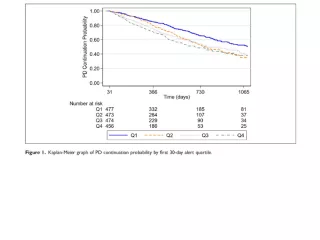
This study linked Sharesource data from Vantive’s Homechoice Claria PD cycler to outcomes collected in the ANZ registry to examine the relationship between number of alerts in the first 30 days of PD and transfer to haeomdialysis (HD). While one may support the idea that APD has advantages over in-centre HD, machine noise, drain pain and alerts can have an impact on patient experience.
The study included all PD patients over 18 years old commencing APD with the Homechoice Claria from 2019-2023 with at least one Sharesource record in the first 30 days of PD. The cohort was divided into four quartiles based on the alert number in the first 30 days. From 30 days’ time to event (death or HD transfer etc.) was modelled with adjustment for age, state/jurisdiction, BMI, sex, smoking status, eGFR at dialysis start, primary kidney disease, comorbidities and late referral.
Results
Patients in the 2 quartiles with the highest number of alerts were more likely to be older, male, smokers and have a higher BMI. Other comorbidities were evenly distributed across the quartiles. The more recent cohort of PD starters were more likely to be in the highest quartile and there was a regional difference.
- Low drain volume was most common alert in highest quartile
- Low UF is also more common in the highest quartile while other alerts were more evenly spread
- The 2 highest quartiles were repeatedly getting the same alerts although it was highest in the start of the first 30 days
- Patients in the highest quartile had a higher median number of program changes