
 United States
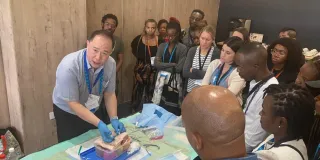
On 31 October 2026, clinicians from across New Zealand will gather at Waikato Hospital in Hamilton for the PD Access and PD Catheter Insertion Workshop, an initiative that represents much more than a technical training event. It is an opportunity to strengthen one of the most important enablers of home dialysis: timely, reliable access to peritoneal dialysis (PD).
For many patients with kidney failure, PD offers the possibility of receiving life-sustaining treatment at home, providing greater flexibility, independence, and often a better quality of life. Despite these benefits, access to PD can be limited by delays in catheter placement, workforce constraints, and variations in local service capability. If suitable patients are unable to receive a catheter when they need one, the opportunity to commence PD may be lost, resulting in an unplanned start on haemodialysis instead.
This is why programs that focus on improving PD access deserve our attention and support.
The NZ PD Catheter Access Program has been developed to help address these challenges through a coordinated pathway that supports earlier referral, timely catheter placement, and the development of local insertion expertise. At its heart is a simple objective: ensuring that every suitable patient has the opportunity to choose PD and begin treatment without unnecessary barriers.
Achieving this goal requires more than equipment or infrastructure. It requires confidence, competence, and collaboration among nephrologists, surgeons, interventional clinicians, nurses, and renal services. Training is therefore a critical component of any sustainable PD access strategy.
The Waikato workshop has been designed with this principle firmly in mind. Participants will explore best practice in PD patient selection, access planning, catheter insertion techniques, peri-operative care, and complication management. Particular attention will be given to the Seldinger technique, an increasingly important method for percutaneous PD catheter insertion that can help improve service flexibility and responsiveness when appropriate expertise is available.
Importantly, the workshop goes beyond traditional lectures. Delegates will participate in hands-on practical sessions covering theatre gowning and aseptic technique, skin incision and suturing skills, PD nursing perspectives, and ultrasound-guided exit-site planning. These stations provide participants with an opportunity to develop procedural confidence in a supportive learning environment.
One of the most valuable aspects of the program is the use of realistic simulation models. By practising catheter insertion techniques on pork belly models, clinicians can refine their technical skills, gain familiarity with procedural workflows, and build confidence before applying these techniques in clinical settings. Simulation-based education has become a recognised component of procedural training because it enables skill development without compromising patient safety.
The workshop also highlights the critical role of multidisciplinary care. Successful PD programs depend on coordinated teamwork before, during, and after catheter placement. Patient education, access planning, exit-site care, complication management, and ongoing support all contribute to long-term outcomes. Bringing clinicians and PD nurses together in a shared learning environment reflects the collaborative nature of high-quality kidney care.
As demand for kidney replacement therapy continues to grow, expanding local access to PD services will become increasingly important. Building procedural capability within regional centres can help reduce waiting times, improve equity of access, and offer patients greater choice regarding where and how they receive treatment.
Ultimately, this workshop is about patients. Every clinician who gains new skills, every service that expands its catheter insertion capability, and every barrier removed from the care pathway has the potential to improve a patient's treatment journey. When suitable patients can access PD in a timely manner, they are better positioned to make informed choices, start therapy in a planned way, and benefit from the advantages that home dialysis can provide.
The PD Access and PD Catheter Insertion Workshop at Waikato Hospital is therefore more than a day of education. It is an investment in clinical capability, service development, and patient-centred care. By strengthening access pathways and supporting clinicians to develop practical expertise, New Zealand can continue moving towards a future where more patients have the opportunity to start PD sooner, safely, and with confidence.